
Overview
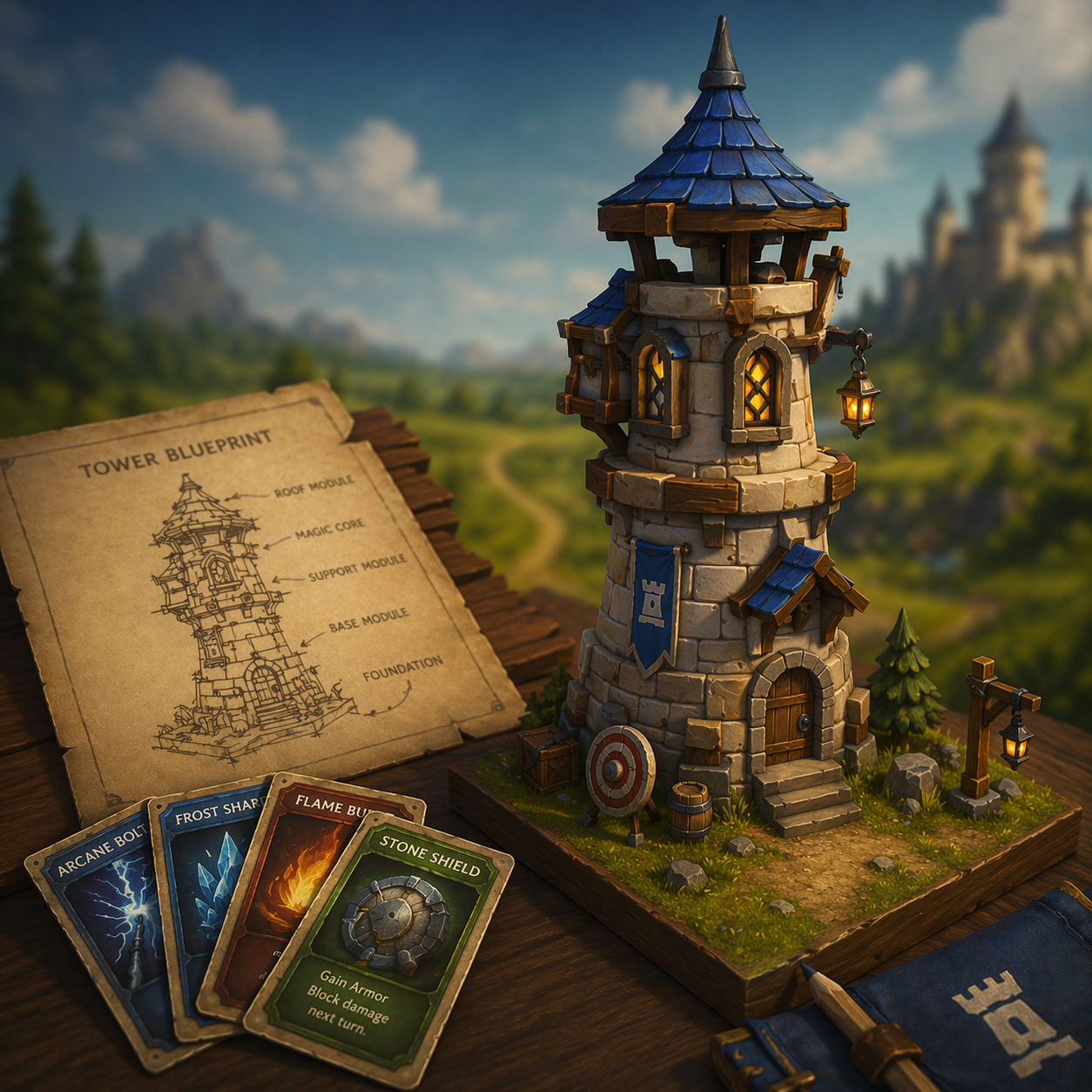
This week focused on establishing the foundation for Turret Deck Builder as a new game built from a tower defense and deckbuilder-inspired core concept that was developed as part of big fry’s game jam named Final Draw. The core direction was clarified around deeper build personalization, including modular tower components, deck box bonuses, starter card selection, and unlockable progression. Alongside that early design work, most of the week was spent moving the project into a proper pre-production structure by building out the GDD, creating project documentation, organizing folders and workflows, and setting up long-term production planning. By the end of the week, the project had moved from paper notes into a structured digital development environment with its initial planning framework in place.
Major Accomplishments
- Expanded the original game jam concept into the early core vision for Turret Deck Builder.
- Started the project’s Foundations phase and began building the main GDD.
- Set up the Obsidian vault, project folder structure, roadmap, and basic kanban workflow.
- Completed key pre-production documentation including the one-pager, design pillars, scope lists, and vertical slice specifications.
- Implemented and linked Perforce P4 version control to the Unreal Engine project.
- Created an initial risk register, naming and folder standards, and project page setup.
Systems Developed or Updated
Core Game Concept Definition
- Defines the high-level gameplay direction for the project.
- This week focused on expanding the original deckbuilder tower defense concept into a broader progression-driven structure with tower component choices, deck box bonuses, starter card selection, and unlockable items.
- Current state: Prototype
Game Design Documentation Pipeline
- Organizes the project’s design information, scope, rules, and long-term development direction.
- This week included writing and locking core GDD sections, design pillars, pillar do/don’t rules, scope lists, vertical slice specs, and a key design decision to avoid friendly units until after the vertical slice.
- Current state: Functional
Production Planning Workflow
- Supports task tracking, roadmap planning, and project organization during development.
- This week included setting up the roadmap, a basic kanban board, workflow rules, WIP limits, and definitions of ready/done, along with establishing the intended 18-month production timeline.
- Current state: Functional

Project Knowledge Base / Obsidian Vault
- Centralizes design notes, documentation, and production references.
- This week included updating the Obsidian template to better support a larger project, creating the vault structure, and transposing handwritten notes into digital form.
- Current state: Functional

Version Control Setup
- Provides source control for the Unreal Engine project and development workflow.
- This week included installing, configuring, and linking Perforce P4 to the project.
- Current state: Stable

Problems Encountered and Solutions
No major technical blockers were documented this week. Most of the work centered on project definition, documentation, workflow setup, and infrastructure rather than implementation troubleshooting.
Current Project State
Turret Deck Builder is currently in the foundations / pre-production phase. The project is not yet in active gameplay implementation, but its core direction, documentation structure, production workflow, and version control pipeline are now in place. The main design pillars, scope boundaries, and vertical slice expectations have been defined early, which gives the project a much stronger base before system prototyping begins. Overall, the project is still at an early stage, but it is now organized as a serious long-term production rather than a loose concept.

Next Week Plan
- Continue expanding the GDD with core ideas and system definitions.
- Keep refining the project’s documentation structure inside the Obsidian vault.
- Build out the reference pack for the project.
- Continue shaping the roadmap and kanban as scope becomes clearer.
- Begin pushing the project from planning and foundations toward early prototype preparation.
Time Spent This Week: 16 hours